

Communion
Prefilled communion cups or pour your own: what each costs you
Both serve the same communion. The difference is who does the work, when, and what one person costs.
What a prefilled cup is
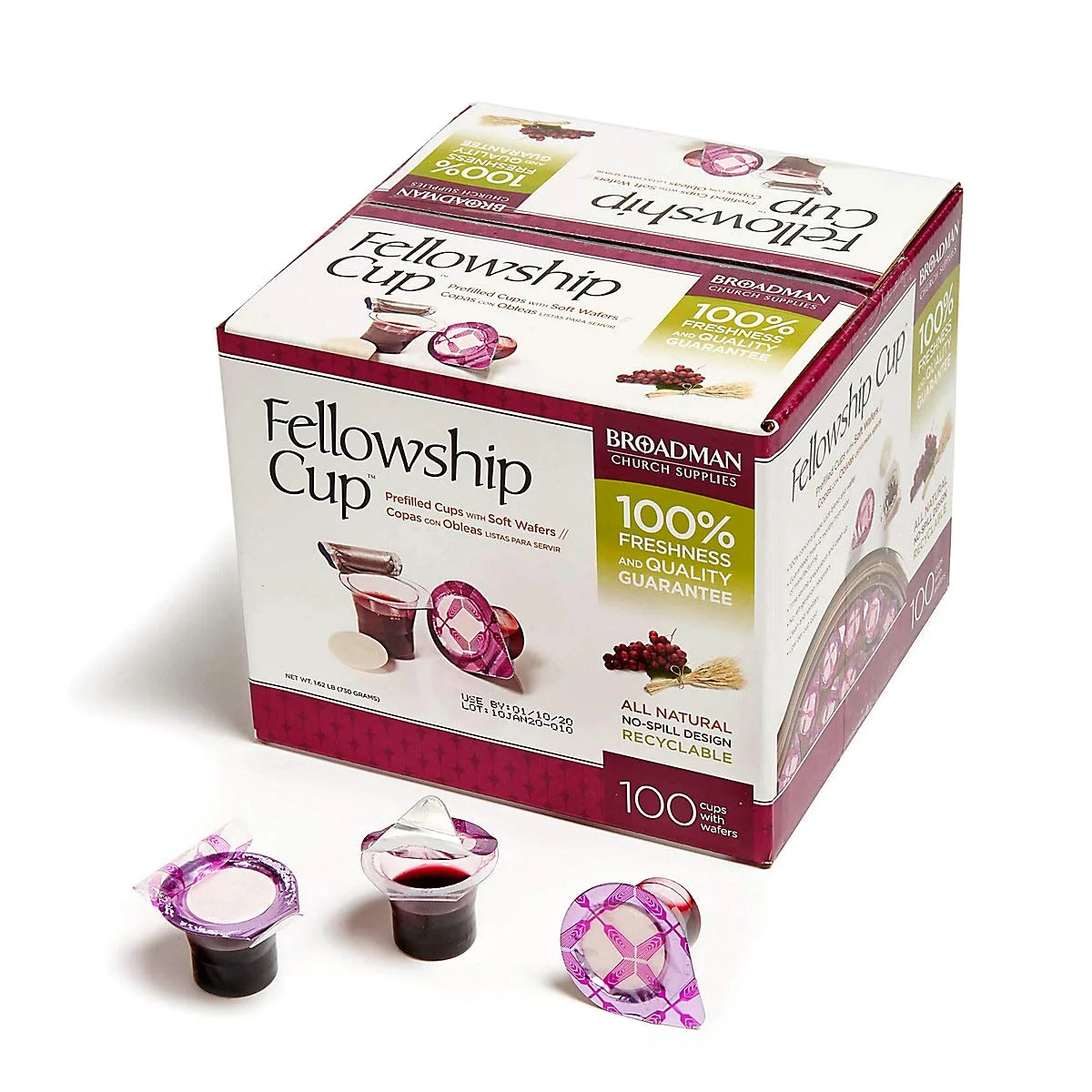
A Fellowship Cup is a small sealed cup of Concord grape juice blend. In the juice-and-wafer version an unleavened wafer sits under a second seal on top, so one cup holds both elements. You peel the top seal for the bread and the lower seal for the juice. Nothing is poured, nothing goes back to the kitchen, and the box needs no refrigerator.
The cups are shaped for the rings of a standard communion tray, so they go into the trays you already own. The box is guaranteed fresh up to the date stamped on it.
What pouring your own involves
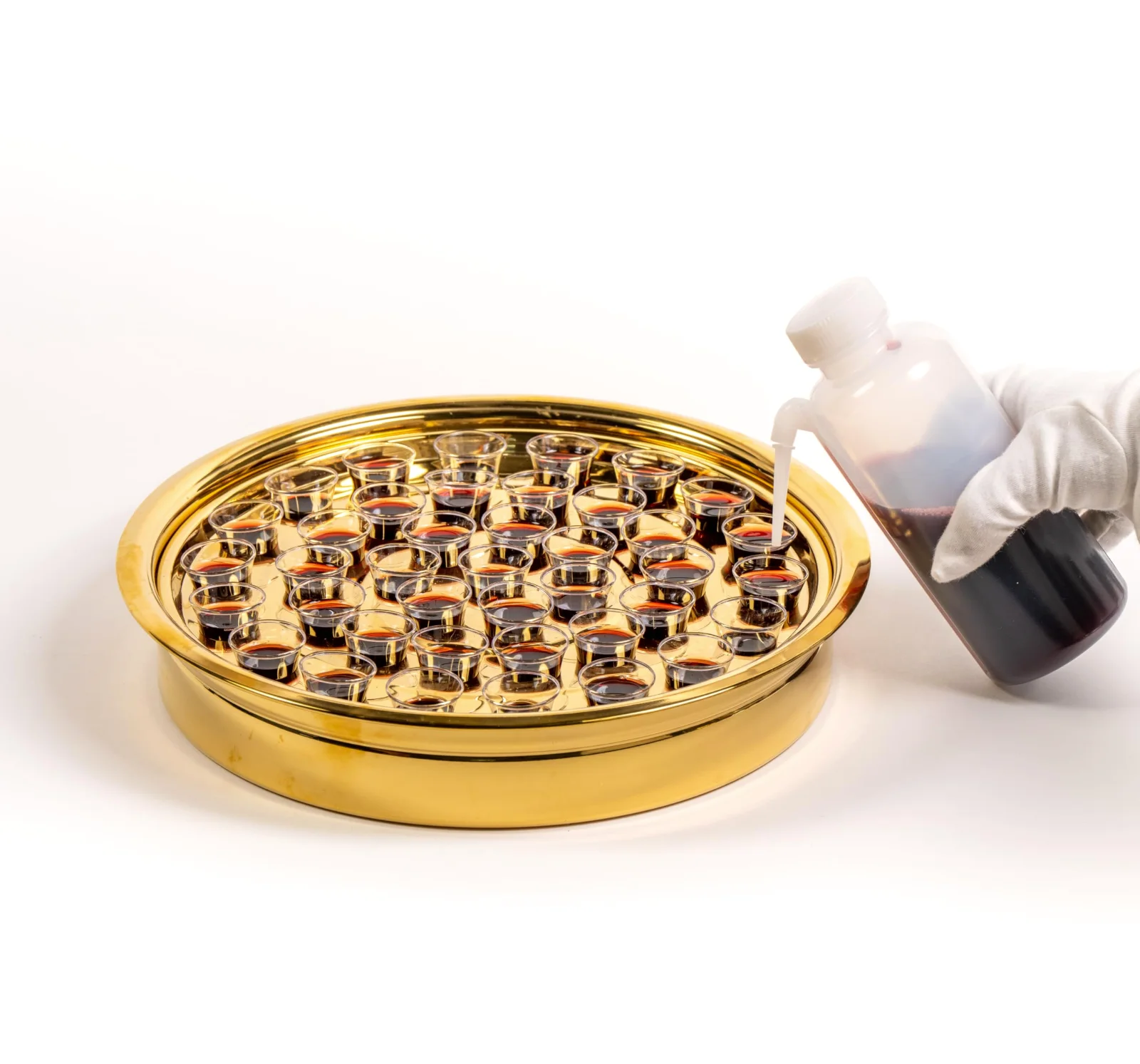
The other way, which the Broadman range supplies too, is empty cups, a bottle of juice and bread. The Broadman disposable cup is clear plastic, 1 3/8 inches high, and holds about 3/4 oz. Someone fills each cup from a 16 oz side-spout bottle, which fills 80-plus cups, and someone cuts or counts the bread onto a plate or a tray insert.
For a church of 200 that is about an hour on Saturday or early Sunday, and the trays and plates are washed afterwards. Many churches have a communion team that likes this hour. Others have one tired volunteer.
The cost per person
Compare like with like. A prefilled juice-and-wafer cup covers both elements, so set it against an empty cup plus bread plus the juice you buy. The bundle of 1,000 empty cups with bread is the closest Broadman equivalent. Your juice comes on top of it.
| Way to serve | What one unit covers | Box | Per person |
|---|---|---|---|
| Fellowship Cup, juice and wafer | Juice and bread, sealed | 500 | 22¢ |
| Fellowship Cup, juice only | Juice, sealed. Bread separate | 100 | 29¢ |
| Empty cups with bread (bundle) | Cup and bread. Juice separate | 1,000 | 3.3¢ |
| Empty disposable cups | Cup only. Juice and bread separate | 6,000 | 2.1¢ |
Time, washing and the trays
Prefilled cups move the work to the factory. There is no filling, no cutting, and only the trays to wipe. They also take the elements out of shared hands until the moment each person lifts a cup, which some churches chose for that reason alone.
Pouring your own keeps the cost per person lower and leaves the choice of juice and bread with you: your own baked bread, a particular juice, a gluten-free plate set out separately. Glass cups, washed after the service, are a third way for a church with a dishwasher.
What each way needs on the table
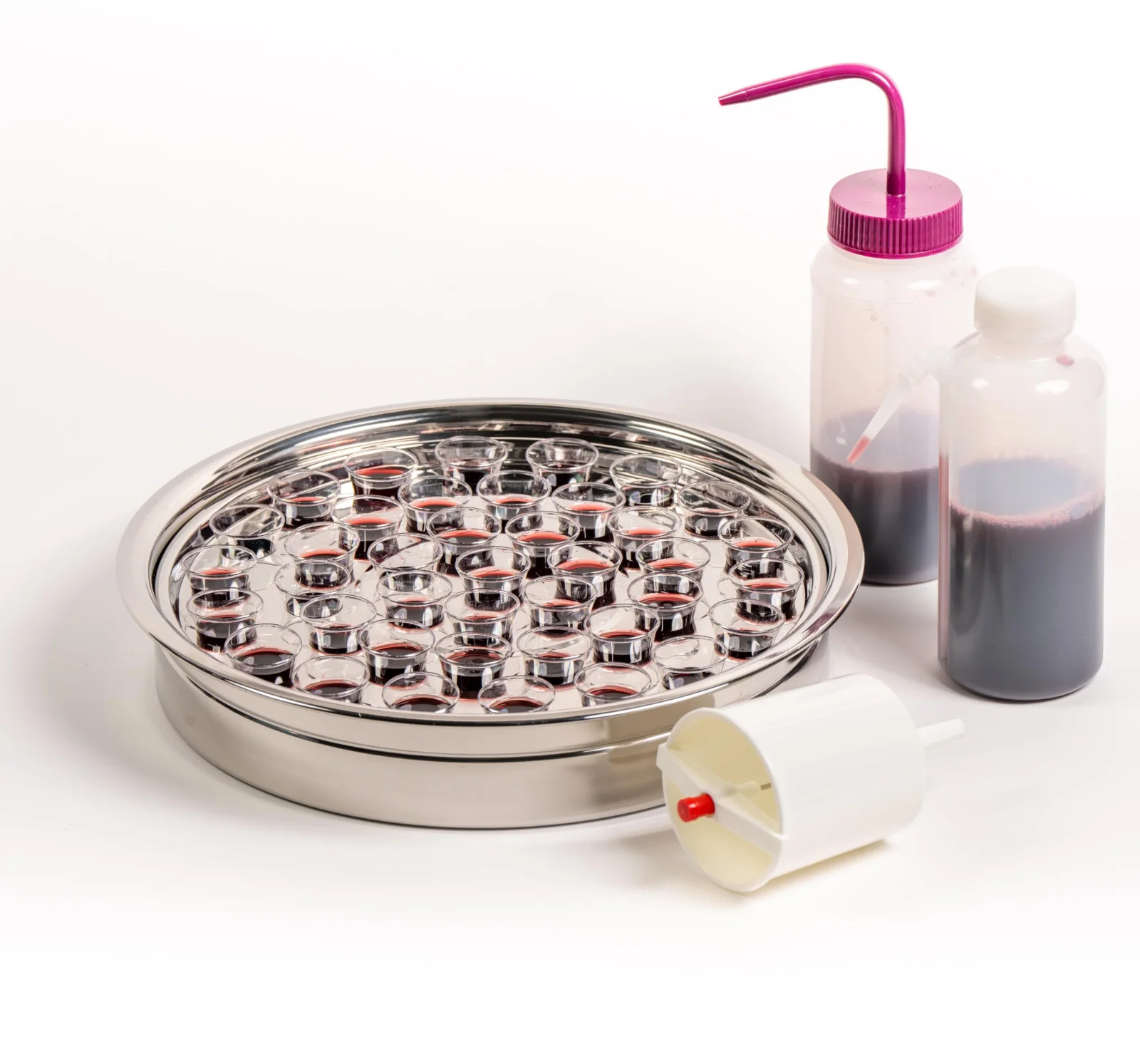
Prefilled cups need trays and nothing else. The cups sit in the rings of a standard tray, and a one-pass RemembranceWare tray holds 32 of them, so the servers carry the same trays they already have. The cover with its Latin cross sits on top until the elements are served.
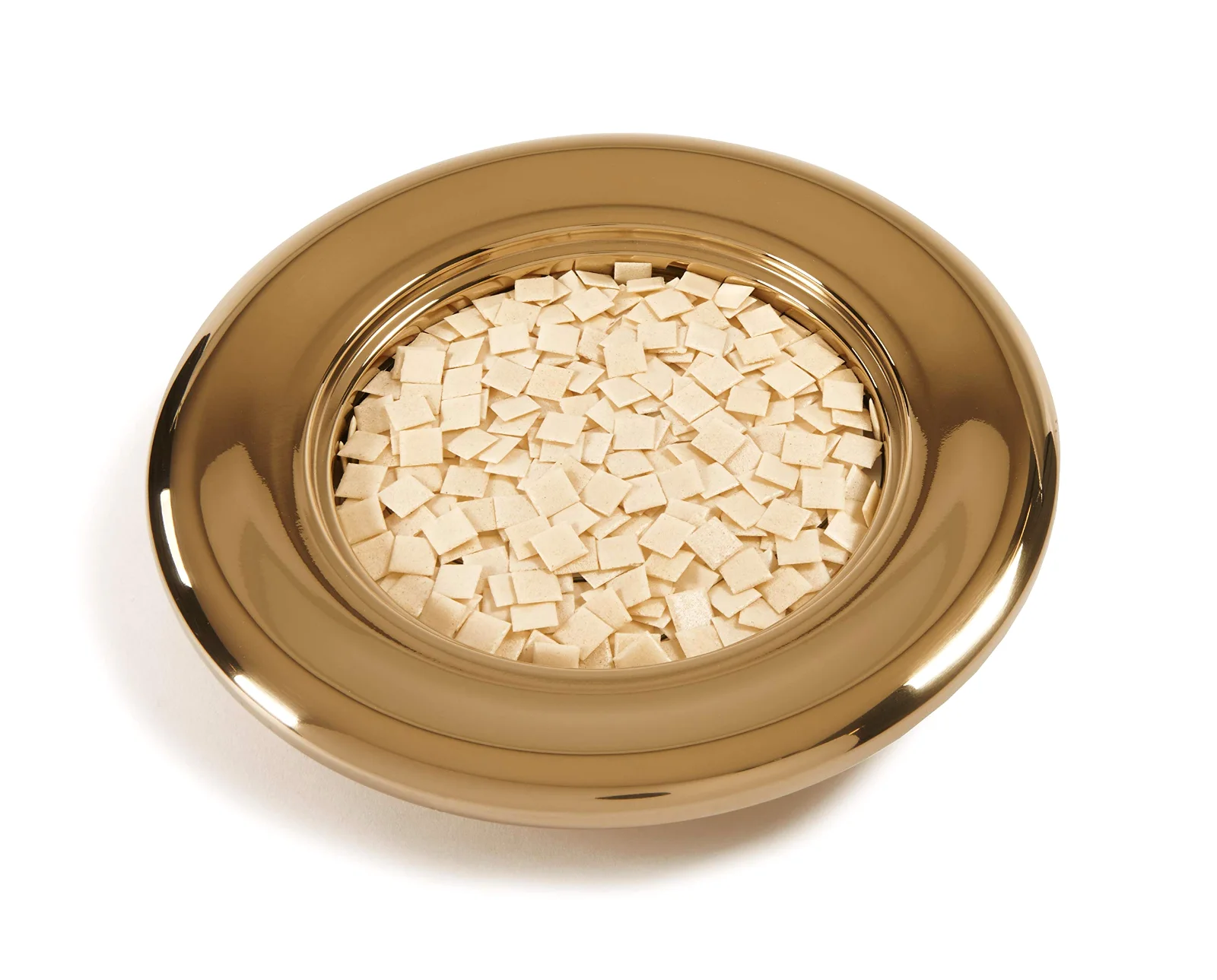
Pouring your own needs more pieces: the cups, a filler bottle or two, juice, bread, a bread plate or a tray insert for 40 pieces, and somewhere to wash and dry the trays afterwards. None of it is expensive, and most churches already own it. The cost is the hour, not the equipment.
Leftovers and storage
A sealed cup that is not used goes back into its box and waits for the next service, up to the date stamped on the box. Nothing is thrown away unless the date passes. So a small church should buy the box it will finish in time rather than the box with the lowest price per cup.
Poured cups that are not used are poured out. An opened bottle of juice lasts as long as its own label allows, and cut bread dries on the plate. A church that pours its own learns to fill a few cups short and keep a filler bottle ready for the latecomers.
Visits and small groups
Away from the sanctuary the choice is easier. A sealed cup needs no bottle, no bread plate and no sink, so the six-count box of Fellowship Cups travels to a hospital room or a small group in a coat pocket. Churches that pour their own on Sunday often keep a few of these boxes for the deacons who visit.
For regular visits, a portable set does the same job with your own juice: the maroon case holds 25 disposable cups, a 3 oz juice bottle and bread for about 38 people, and the slim Traveler carries 25 cups and 50 ml of juice in a case half an inch deep.
A trial before you change
Changing how communion is served is a decision for your church, not for a supply catalog. If you are thinking about it, order one box of 100 prefilled cups and use it for one Sunday alongside your usual trays. The people who prepare and the people who serve will tell you more than any table of prices.
Ask three questions after that Sunday. How long did setting the table take, compared with a normal week? Did the servers manage the peel-back seals in the time the music allowed, or did the room wait? And did anyone in the pews struggle to open the cup, an older member or a child? The answers decide more than the cost per person does.
A mixed approach also works. Some churches keep their trays and pour their own on most Sundays, and use prefilled cups for the large services, when the preparation team would otherwise start the night before. The trays stay in use, and the boxes cover the weeks when the count doubles.
Which suits your church
Whichever you choose, the planner on our front page turns your numbers into boxes, and the cup count guide explains the arithmetic.
- Choose prefilled if preparation falls on one or two people, or if you serve a large room quickly.
- Choose empty cups and a filler if you have a team, a sink and a budget that counts every cent per person.
- Choose the juice-only cup if you serve your own bread or need a separate gluten-free plate.
Deciding at the next deacons' meeting
Ask
- Who prepares communion now, and how long it takes
- How many trays you own and what cups they take
- Whether anyone needs gluten-free bread
Compare
- Per-person cost of a prefilled cup
- Per-person cost of cup, bread and your juice
Try
- One box of 100 prefilled cups for one Sunday before a large order
More guides
Read next
Ordering
How many communion cups does your church need?
The arithmetic of a communion order: people times services, the box sizes of Broadman cups, what one cup costs, and how long a box lasts.
Gluten-free
Gluten-free communion: what the label means and how to serve it
What "gluten-free" on a bag of communion wafers must mean under the FDA rule, which Broadman breads contain wheat, and how to keep a separate plate.
Church office
Offering envelopes and the giving records your members need
What the IRS asks of a giver and of the church: records for gifts of any amount, written acknowledgments from $250, and how numbered envelopes help.