

Church office
Offering envelopes and the giving records your members need
An offering envelope does two jobs: it gathers the gift, and it leaves a record. The second job is the one your members need in January.
What the giver must keep
For a money gift of any amount (cash, check, card or transfer), the IRS asks the giver to keep either a bank record or a written communication from the church. The record must show the date, the name of the church and the amount. The giver's own notes, such as a check register, are not enough on their own.
Cash dropped loose in the plate leaves no record at all. Cash in a named envelope can be counted, recorded and acknowledged.
Gifts of $250 or more
For a single gift of $250 or more, a giver who claims it needs a written acknowledgment from the church. The acknowledgment names the church and the amount, and states whether the church gave anything in return. For a church, what it gives in return is usually nothing, or only an intangible religious benefit, and the acknowledgment says so.
The giver must have it by the time the return is filed, so most churches send one statement after the year closes, naming every gift.
| Gift | What the giver keeps | What the church provides |
|---|---|---|
| Any amount, money | A bank record or a written communication from the church showing the date, the church and the amount | A written statement, if the giver has no bank record |
| $250 or more in one gift | A written acknowledgment, obtained by the date the return is filed | The acknowledgment: church name, amount, and whether anything was given in return |
How envelopes make the statement easy
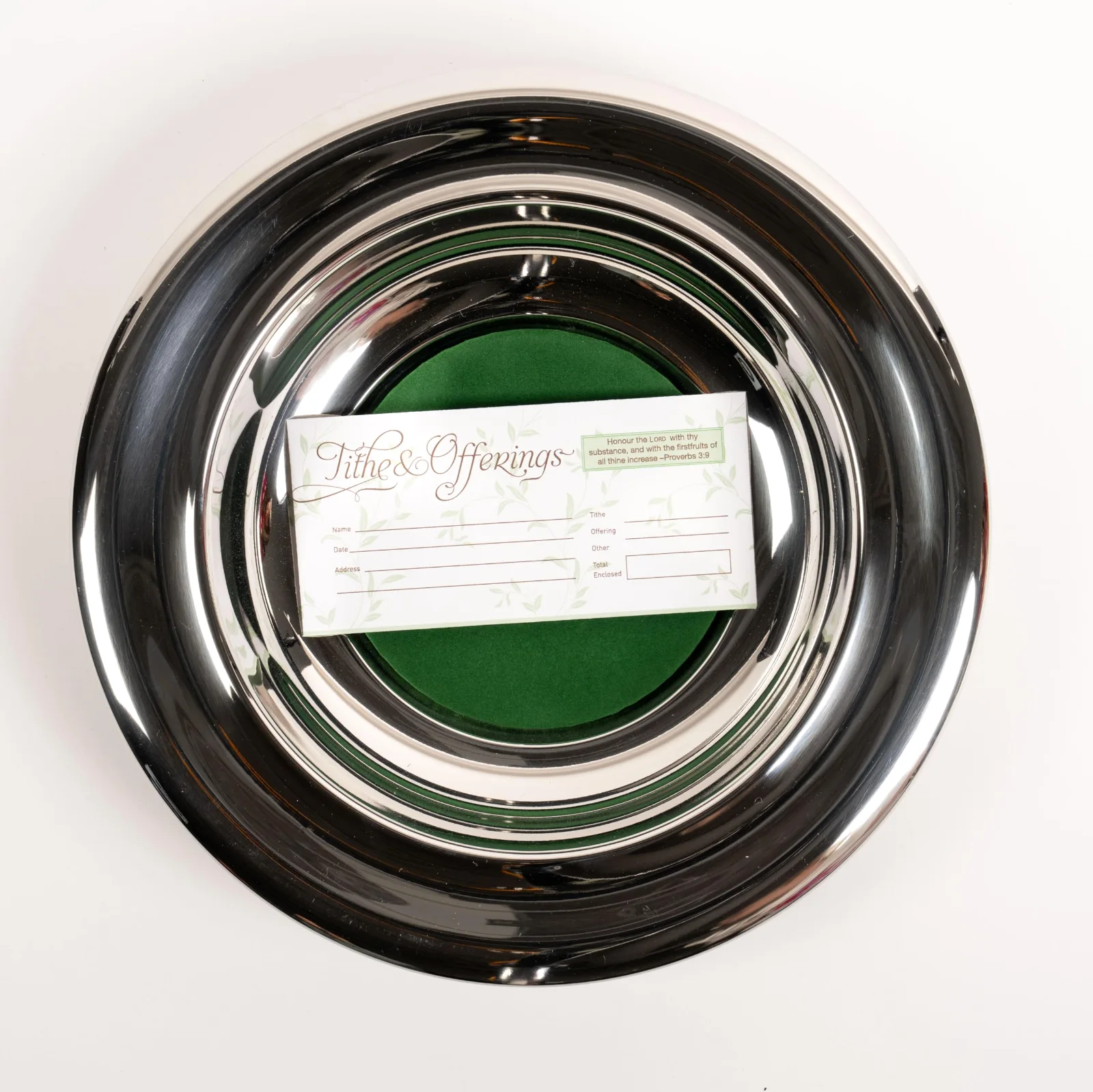
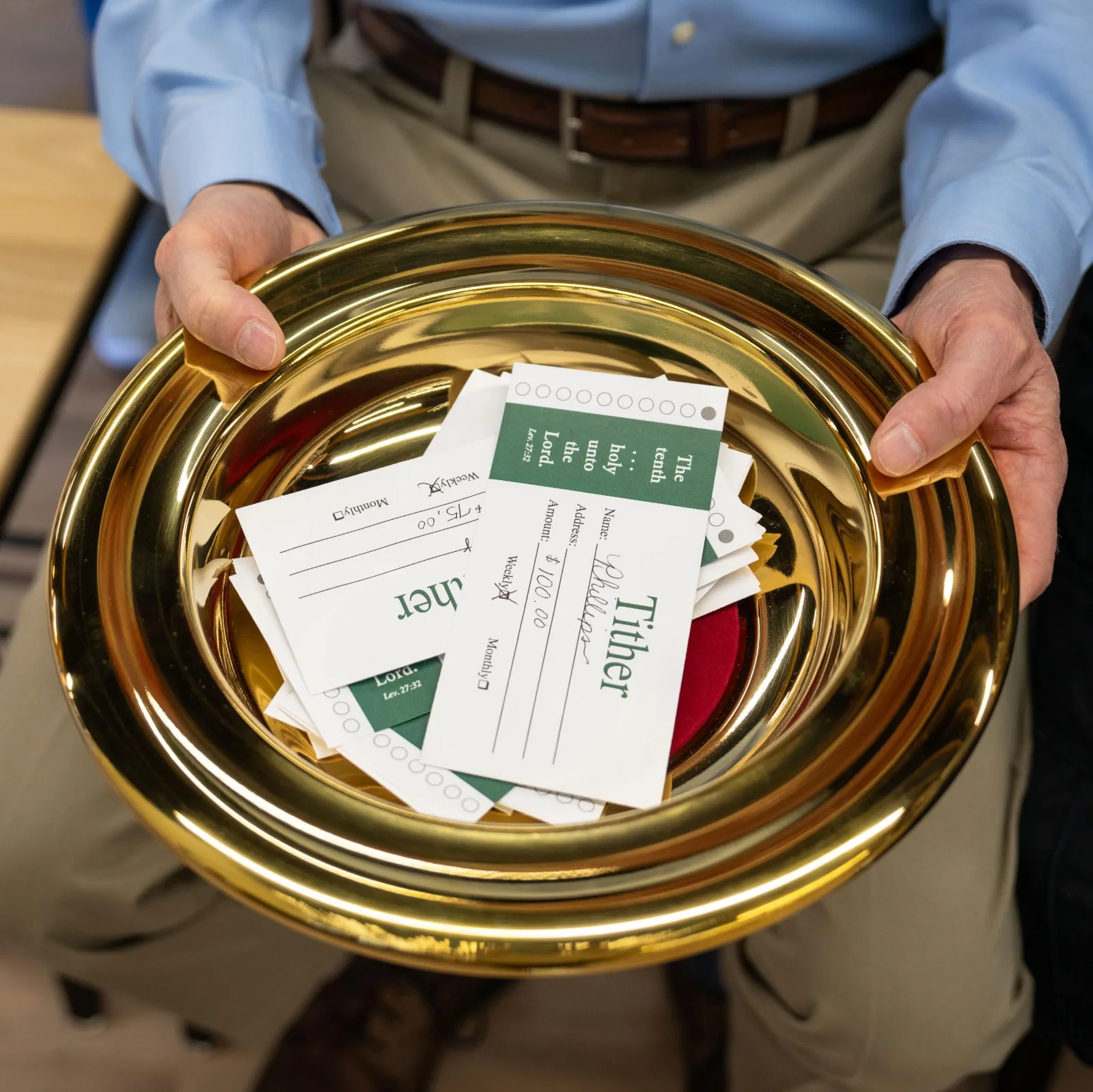
A box of 52 Tithes and Offerings envelopes from the Broadman line is a year of Sundays for one household. Write the household name or number on each, and the counting team can record every gift against a name. At the end of the year the statement writes itself from that record.
Gifts for a building fund are easier to report when they arrive in their own envelope, so a separate building fund envelope keeps those totals apart. A small church that keeps its books on paper can do the same in a finance record book.
What a year-end statement says
The IRS page on written acknowledgments lists what the church must put in writing for a gift of $250 or more. A statement that covers the whole year usually lists the same things for every gift, small or large, so that one letter serves every purpose.
- The name of the church.
- The amount of each cash gift, with its date.
- A description, but not a value, of any gift that was not money.
- A sentence saying that no goods or services were given in return, or that what was given consisted only of intangible religious benefits.
Cash, checks and cards
A check or a card payment leaves its own bank record, and for gifts under $250 that record is enough for the giver. Cash is different: the only written record of cash is the one the church makes. That is the strongest reason to hand out named envelopes and to ask members who give in cash to use them.
Gifts made online or by bank transfer appear on the giver's statement too, but the church should include them in the year-end letter, so the member has one document with every gift in it. A household that gives partly in cash and partly by card then sees both in the same list, with one total at the bottom.
Keeping the books
A small church can keep its giving records in a ledger rather than software. Broadman sells a finance record book for small churches, and a Spanish edition of it, for exactly that. Whatever you use, keep the count sheets and the envelopes for as long as your accountant advises, and keep them together.
Separate funds deserve separate envelopes. A building fund envelope, kept apart from the weekly Tithes and Offerings envelope, means the year-end statement can show each fund without anyone sorting envelopes by hand in January.
Handing out the boxes
Envelope boxes go out once a year, usually in December or January, with each box assigned to a household. Keep a list of who has which number, and give new members their box when they join rather than waiting for the next year.
Members who move away or stop giving by envelope leave numbers unused. Do not hand those numbers to someone else in the same year: the record for that number would then mix two households, and the year-end statement would be wrong for both.
Visitors who give once can use a plain envelope with their name and address written on it. That gives the counting team enough to send a short thank-you note. If the note names the church, the date and the amount, it is also the written record of a cash gift that the IRS asks the giver to keep, so write those three things on every note, even for a small gift, and keep a copy with the count sheet of that Sunday.
Special offerings through the year
Most churches take more than the weekly offering: a missions offering in the fall, a Christmas offering, a benevolence fund for families in need. Each one is easier to count and to report when it arrives in an envelope marked for it, because the counting team can total the fund without asking anyone what a loose bill was meant for.
The year-end statement can then show the weekly gifts and each special fund on separate lines. Members who want to know what they gave to missions find it without adding anything up, and the treasurer can match every fund to its bank deposit. The offering envelopes shelf has the weekly boxes, the building fund envelopes and the record books side by side.
Counting on Sunday
Two people count, always, and both sign the count sheet. The envelopes stay with the count until the amounts are entered, then go into a sealed bag for the records. The plate itself matters less than the routine, though a felt-lined plate keeps the room quiet while it passes.
Giving records through the year
Each Sunday
- Two counters, both sign the count sheet
- Every named envelope entered against its household
Each quarter
- A summary to any household that asks
After the year closes
- One statement per household: church name, gifts, dates
- The line on goods or services given in return
- Sent early enough to arrive before tax returns are filed
More guides
Read next
Ordering
How many communion cups does your church need?
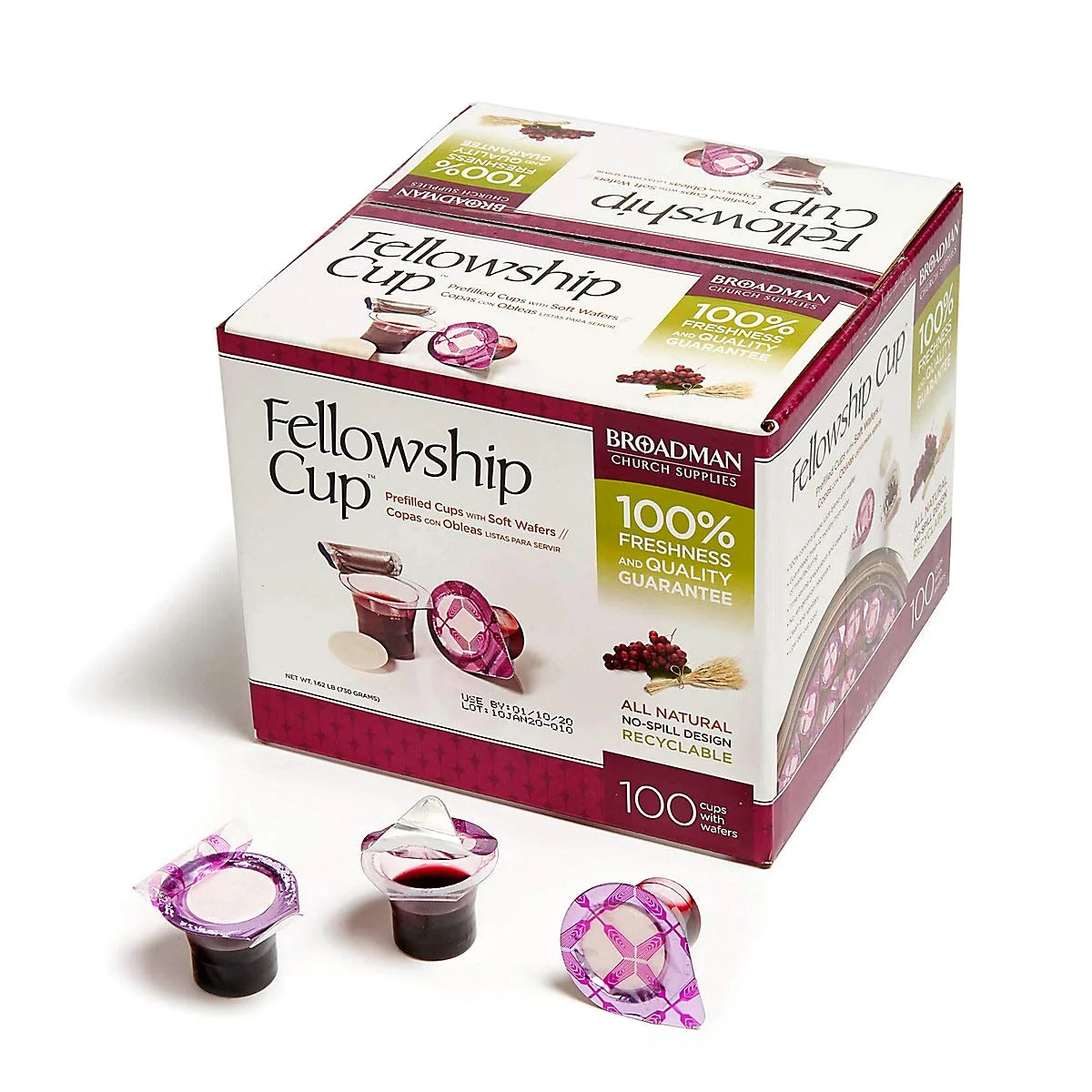
The arithmetic of a communion order: people times services, the box sizes of Broadman cups, what one cup costs, and how long a box lasts.

Communion
Prefilled communion cups or pour your own: what each costs you
Fellowship Cup prefilled cups against empty cups, a filler and bread: the price per person, the time on Saturday, the washing-up and the trays.

Gluten-free
Gluten-free communion: what the label means and how to serve it
What "gluten-free" on a bag of communion wafers must mean under the FDA rule, which Broadman breads contain wheat, and how to keep a separate plate.