
Ordering
How many communion cups does your church need?
Two numbers decide a communion order: how many people take it and how often you serve it. Everything else is choosing the box.
Start with people times services
Count the people who take communion, not the attendance. Children who do not yet take it, visitors who pass, and the people at the piano are not in the count. Then count your services a year: twelve if you serve on the first Sunday of the month, fifty-two if every week, and add Maundy Thursday, Christmas Eve and any service at a retreat.
Multiply the two, and you have the cups you use in a year. A church of 120 that serves monthly goes through 1,440 cups. Serving weekly, the same church goes through 6,240. Add one cup in ten for visitors and the cup that tips over on the tray.
| People | Services a year | Cups a year | Boxes of 500 |
|---|---|---|---|
| 40 | 12 (monthly) | 480 | 1 |
| 80 | 12 (monthly) | 960 | 2 |
| 120 | 12 (monthly) | 1,440 | 3 |
| 120 | 52 (weekly) | 6,240 | 13 |
| 250 | 12 (monthly) | 3,000 | 6 |
| 250 | 52 (weekly) | 13,000 | 26 |
| 500 | 52 (weekly) | 26,000 | 52 |
Match the box to the year
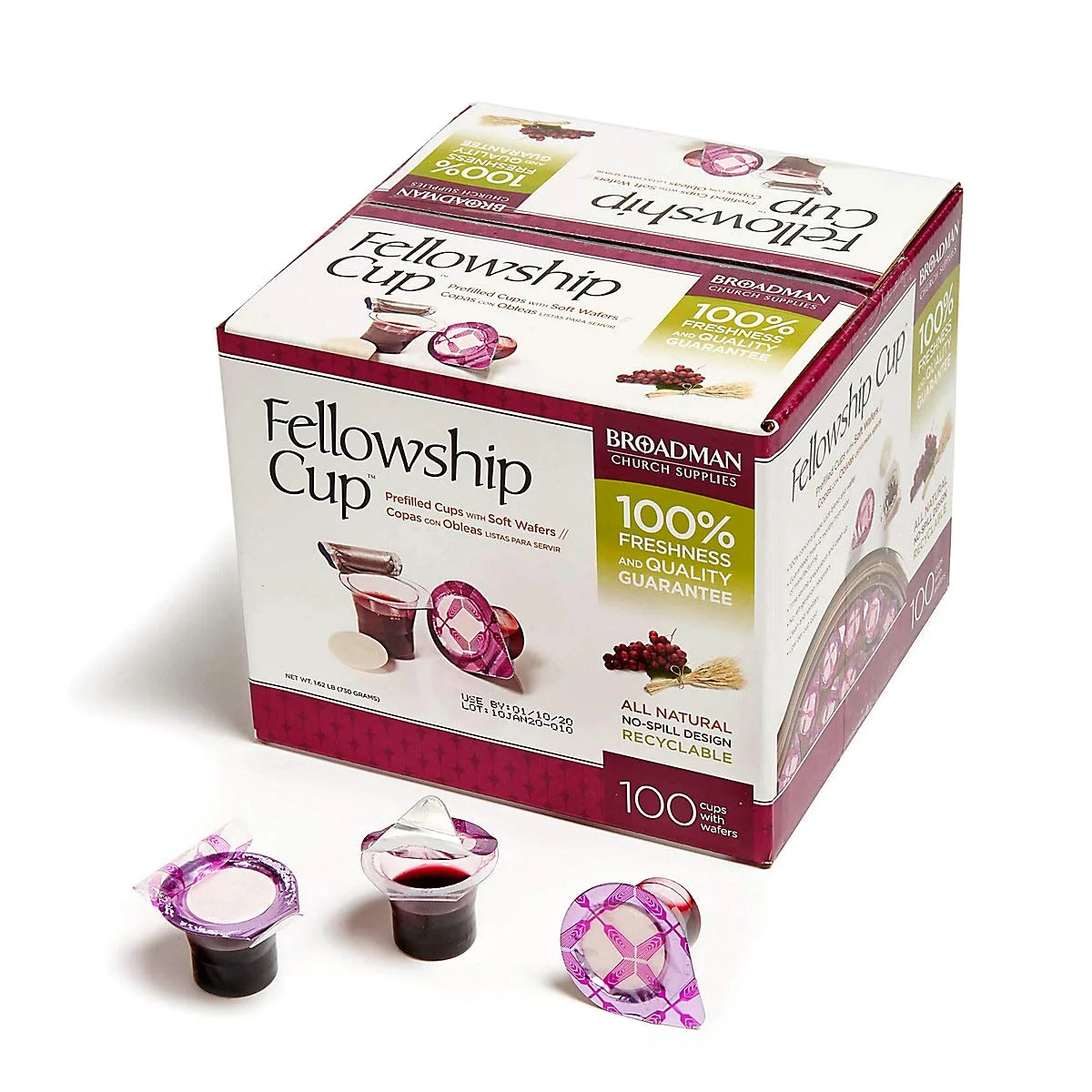
The Broadman lineup sells its prefilled Fellowship Cup with juice and wafer in boxes of 6, 100, 250 and 500, the juice-only cup in boxes of 100, and empty disposable cups in cases of 500, 1,000, 2,000, 4,000 and 6,000. The price of one cup falls as the box grows, and the table further down lists every box by that price.
The trap is the date. Prefilled cups are guaranteed fresh until the date stamped on the box, so a church of forty that serves monthly needs 480 cups a year, and a box of 500 suits it only if the date on that box is more than a year away. Empty plastic cups have no such date, so the big case is safe for any church with a cupboard.
Price per cup, box by box
This is the number a budget meeting asks for. The prefilled cup includes the juice and the wafer, so compare it with an empty cup plus your own juice and bread, not with the empty cup alone. The comparison of prefilled and pour-your-own does that sum.
| Product | In the box | Price | Each | Buy |
|---|---|---|---|---|
| Disposable Plastic Communion Cups6000 cups | 6,000 cups | $125.99 | 2.1¢ a cup |   |
| Disposable Plastic Communion Cups4000 cups | 4,000 cups | $85.99 | 2.1¢ a cup | |
| Disposable Plastic Communion Cups2000 cups | 2,000 cups | $43.99 | 2.2¢ a cup | |
| Disposable Plastic Communion Cups1000 cups | 1,000 cups | $22.49 | 2.2¢ a cup | |
| Disposable Plastic Communion Cups500 cups | 500 cups | $14.99 | 3.0¢ a cup | |
| Fellowship Cup Prefilled Communion Cups, Juice and Wafer500 cups / Single | 500 cups | $107.87 | 22¢ a cup | |
| Fellowship Cup Prefilled Communion Cups, Juice and Wafer250 cups / Single | 250 cups | $64.16 | 26¢ a cup | |
| Fellowship Cup Prefilled Communion Cups, Juice and Wafer100 cups / Single | 100 cups | $28.82 | 29¢ a cup | |
| Fellowship Cup Prefilled Communion Cups, Juice Only | 100 cups | $28.82 | 29¢ a cup | |
| Fellowship Cup Juice Only with Gluten-Free Bread200 cups + 200 gluten-free pieces | 200 cups | $70.04 | 35¢ a cup | |
| Fellowship Cup Juice Only with Gluten-Free Bread100 cups + 100 gluten-free pieces | 100 cups | $55.48 | 55¢ a cup | |
| Fellowship Cup Prefilled Communion Cups, Juice and Wafer6 cups / Single | 6 cups | $6.99 | $1.17 a cup | |
| Fellowship Cup Prefilled Communion Cups, Juice and Wafer6 cups / Pack of 2 | 12 cups | $13.98 | $1.17 a cup | |
| Glass Communion Cups40 cups | 40 cups | $56.99 | $1.42 a cup | |
| Glass Communion Cups20 cups | 20 cups | $29.99 | $1.50 a cup | |
| Communion Cup Filler, Side Spout Bottle, 16 ozPack of 2 | 2 bottles | $19.98 | $9.99 a bottle | |
Trays decide the empty cups
If you fill your own, the cups must sit in your trays. The Broadman disposable cup is 1 3/8 inches high and 1.25 inches across the top, the size standard trays are cut for. A RemembranceWare one-pass tray holds 32 of them and 40 pieces of bread on its insert, so a church of 120 needs four trays plus a spare.
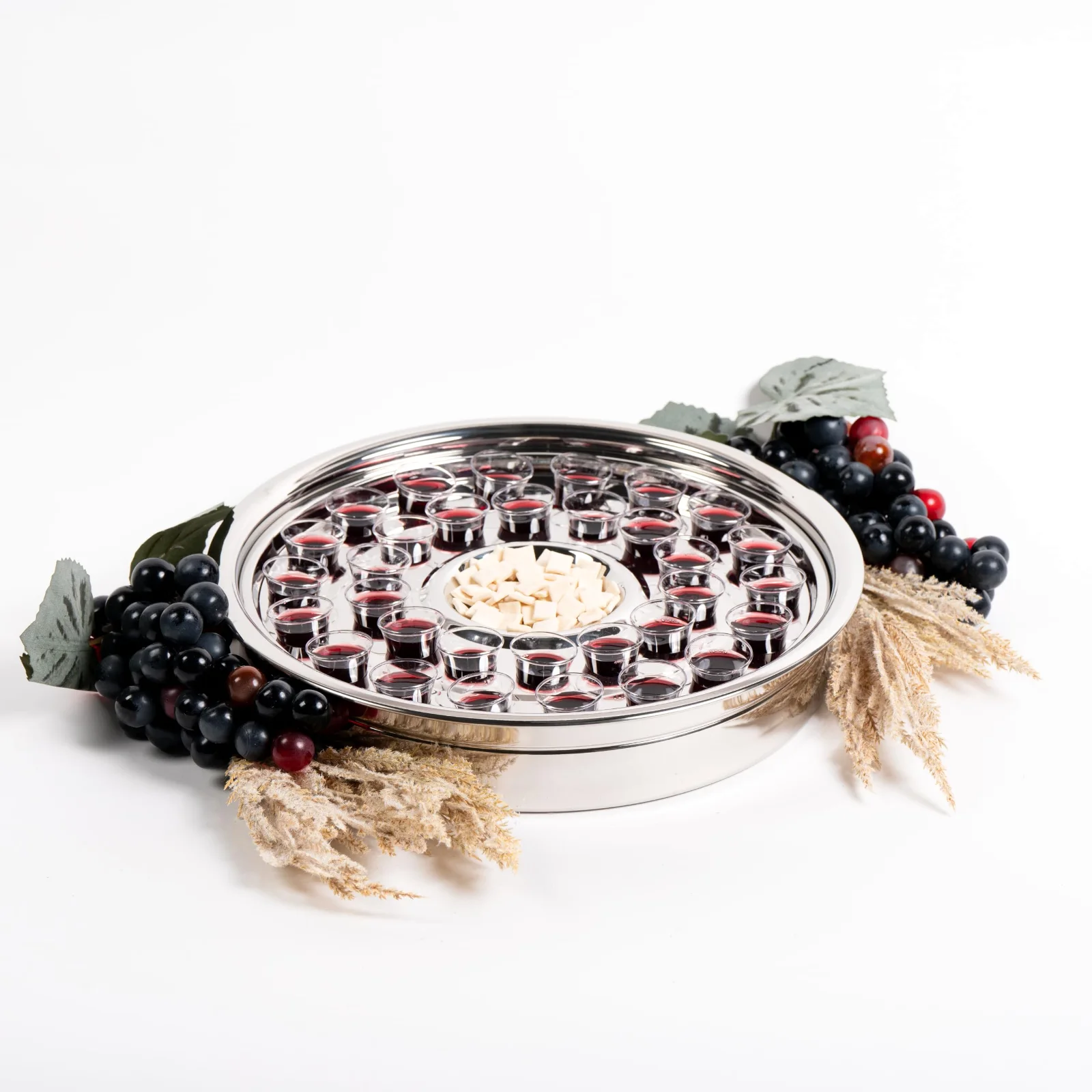
Filling is the other half of the job. One 16 oz side-spout bottle fills 80-plus cups, which for a church of 120 means two bottles poured on Sunday morning.
Juice, if you pour it yourself
Empty cups need juice, and the filler bottle gives the measure. Broadman lists its 16 oz side-spout bottle as filling 80-plus cups, which is a little under a fifth of an ounce in each. At that rate a gallon of juice, 128 ounces, fills about 640 cups, and a church of 120 that serves monthly needs between two and three gallons in a year.
Buy juice by the date on the bottle, not by the case. An opened bottle keeps only as long as its own label says, so a small church is better off with quart bottles opened one Sunday at a time than with a gallon that stands half-full in the refrigerator.
Bread for the same count
Bread follows the cup count, with one difference: pieces are cut or counted onto a plate, and a plate rarely comes back empty. A RemembranceWare tray insert holds 40 pieces, the bread plate takes up to 500, and the cup bundles bring 1,000 pieces of soft bread or 1,000 cross-design wafers with 1,000 cups.
Gluten-free bread is counted separately, for the members who need it. A bag of about 50 gluten-free wafers serves two people for a year of monthly communion with plenty left, while a bag of about 200 suits a church that offers the gluten-free plate to anyone who asks.
Who is in the count
Attendance and communicants are different numbers. A church of 120 on a Sunday might have 90 who take communion, once you leave out young children and guests who pass the tray along. Ask the ushers or deacons who serve to count the empty cups after two or three services. That figure is the one to multiply, and it is usually lower than the attendance sheet suggests. Repeat the count once a year, in the same month.
Then add the services that sit outside the regular rhythm: a Maundy Thursday service, a Christmas Eve candlelight service, a members' meeting that ends at the table. Each one is a full count of its own. A church that serves monthly but adds four special services orders for sixteen services a year, not twelve, and the prefilled cups shelf lists the box sizes that cover that year with the fewest opened boxes left over.
When the count jumps
Easter, Christmas Eve and a baptism Sunday bring people who are not in your usual count. Look at last year's attendance for those services, not the average Sunday, and order for that number a month ahead. Prefilled cups ordered for Easter should carry a date that also covers the next two or three months, because the leftover box goes back on the shelf.
Keep the boxes in date order once they arrive. Put the newest box at the back and open the oldest first, and write the use-by date on the side of the case in marker so the next volunteer sees it without turning the box over.
Visits, retreats and the box that travels
The six-count box of Fellowship Cups is the smallest unit in the line and the one deacons carry to a hospital or a living room. For regular visits, a portable set holds 25 cups and a small juice bottle. Count those cups in your year too, or the Sunday supply runs out first.
Before you place the order
Count
- People who take communion, not attendance
- Services in a year, plus special services
- One cup in ten extra for visitors
Check
- The date on the box you are about to order
- One ring of your tray against 1 3/8 by 1.25 inches
- Whether anyone needs gluten-free bread
Store
- Prefilled boxes at room temperature, oldest date first
- Empty cups sealed, away from dust
More guides
Read next
Communion
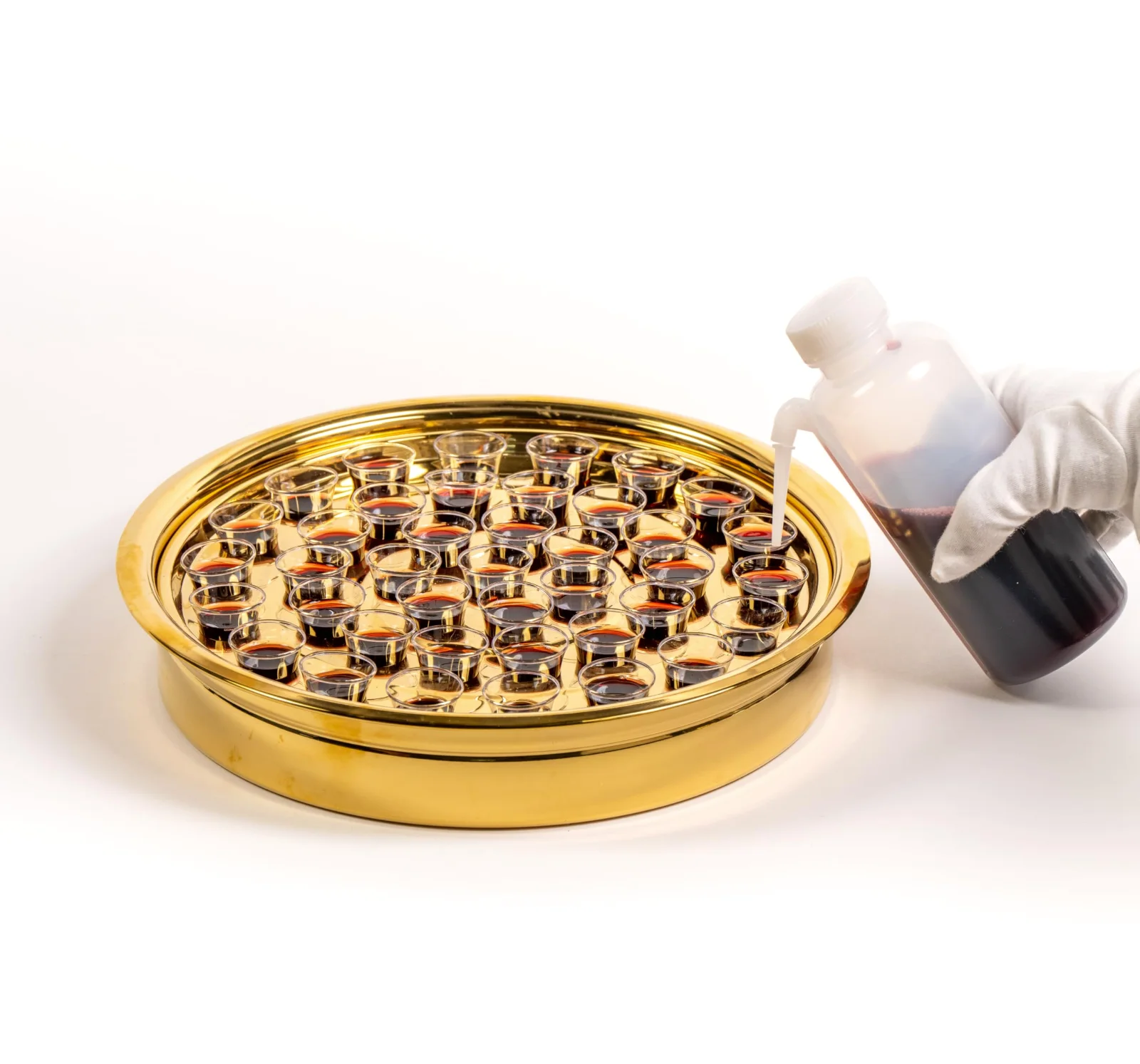
Prefilled communion cups or pour your own: what each costs you
Fellowship Cup prefilled cups against empty cups, a filler and bread: the price per person, the time on Saturday, the washing-up and the trays.
Gluten-free
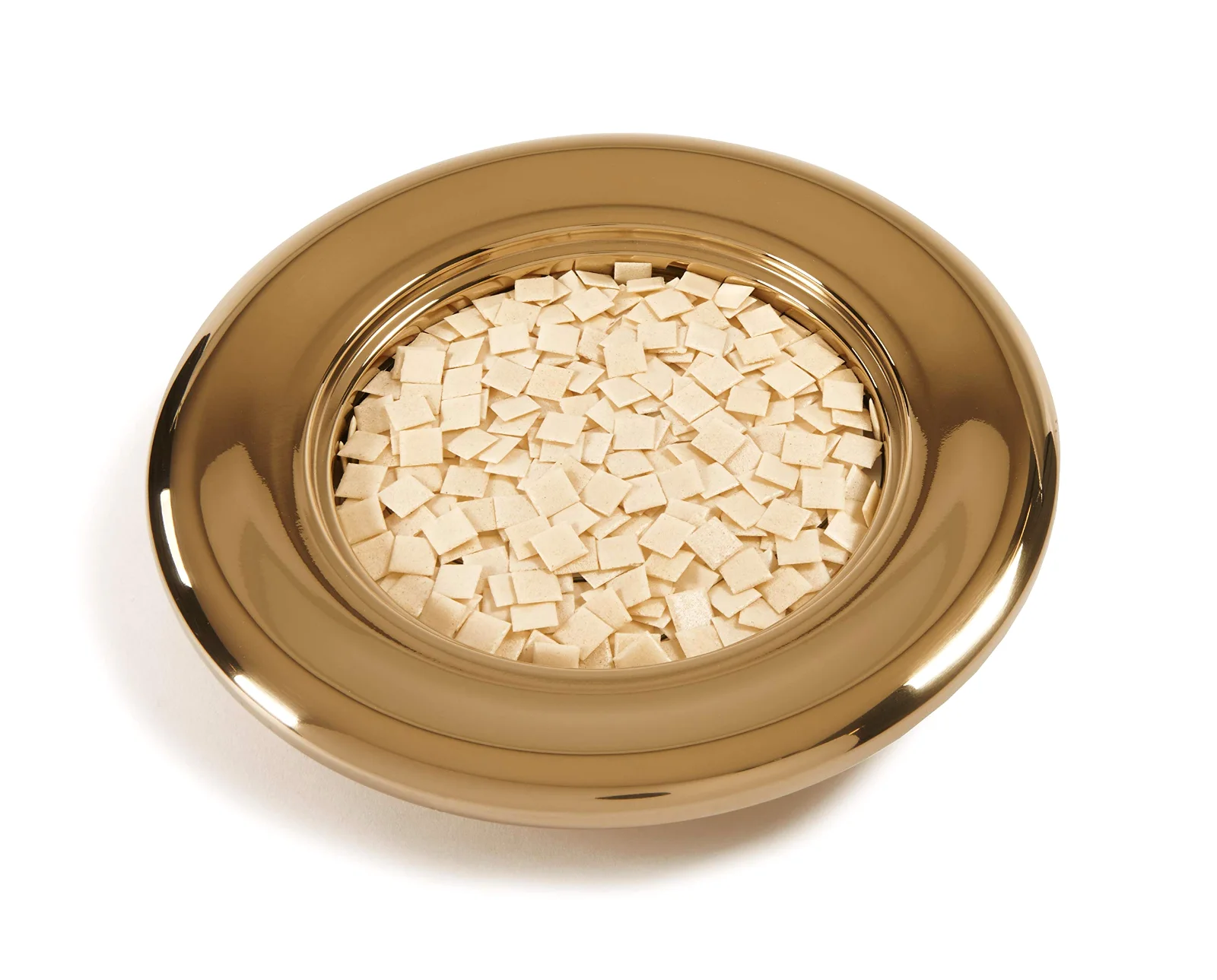
Gluten-free communion: what the label means and how to serve it
What "gluten-free" on a bag of communion wafers must mean under the FDA rule, which Broadman breads contain wheat, and how to keep a separate plate.
Church office
Offering envelopes and the giving records your members need
What the IRS asks of a giver and of the church: records for gifts of any amount, written acknowledgments from $250, and how numbered envelopes help.