

Gluten-free
Gluten-free communion: what the label means and how to serve it
A gluten-free plate on the communion table is a small thing to prepare and a large thing for the person who needs it. Here is what the label promises and how to keep the plate separate.
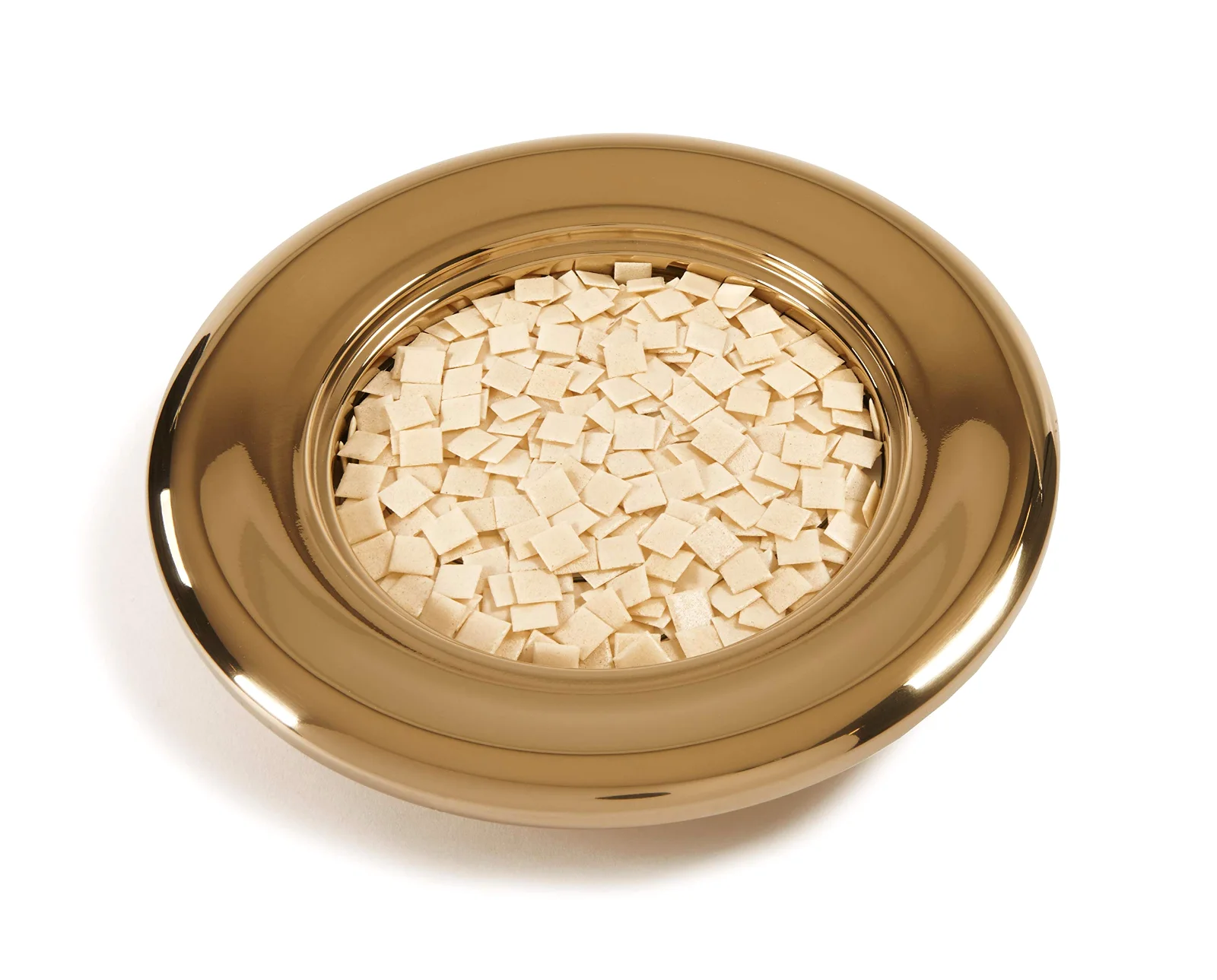
Why it matters on a Sunday
Gluten is a protein in wheat, rye and barley. For someone with celiac disease, eating it damages the lining of the small intestine. The FDA estimates that about 3 million people in the United States have the condition. Others avoid gluten for different reasons, and a few have a wheat allergy, which is a separate thing.
Ordinary communion bread is made from wheat. A church that wants everyone at the table needs a second plate, and a way to keep crumbs of the first one off it.
What "gluten-free" on the bag must mean
Since 2014, a food labeled "gluten-free", "no gluten", "free of gluten" or "without gluten" must contain less than 20 parts per million of gluten under the FDA rule. That is the lowest level the validated tests reliably detect. The claim is voluntary: a maker does not have to print it, but if it does, the food must meet the rule.
Wheat is also one of the nine major food allergens, and the FDA requires it to be named on the label, either in the ingredient list or in a "Contains" line next to it. Reading the label of each bag, every time you reorder, is the habit that protects your member.
Which Broadman breads contain wheat
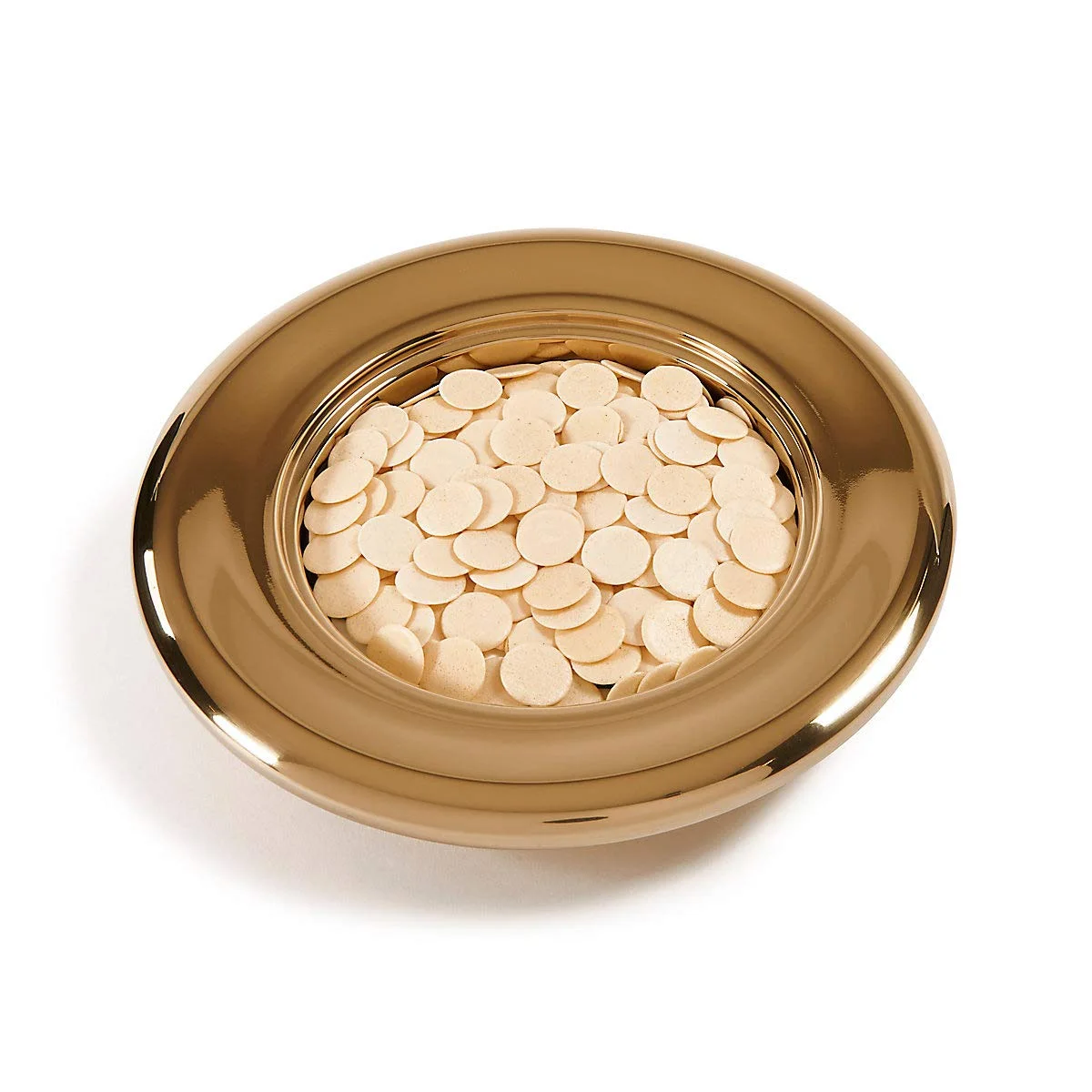
In the Broadman communion range, the gluten-free wafers and gluten-free bread share one flour blend without wheat, rye or barley. The soft unleavened bread and the cross-design wafers that come in the cup bundles are made with wheat flour.
| Bread | Made with | Wheat |
|---|---|---|
| Gluten-free wafers, about 50 per bag | Garbanzo bean flour, potato starch, tapioca flour, sorghum flour, fava bean flour, water | No |
| Gluten-free bread, about 200 per bag | Garbanzo bean flour, potato starch, tapioca flour, sorghum flour, fava bean flour, water | No |
| Soft unleavened bread (in the cup bundle) | Wheat flour, shortening, salt, water | Yes |
| Cross-design wafers (in the cup bundle) | Wheat flour, shortening, salt, water | Yes |
Keeping the plate separate
Cross-contact happens at the table, not in the factory. Set the gluten-free plate out first, before the regular bread is opened. Use a plate that holds nothing else, like the RemembranceWare bread plate, and let one server handle it. Keep the bag sealed between services. The pouches reseal.
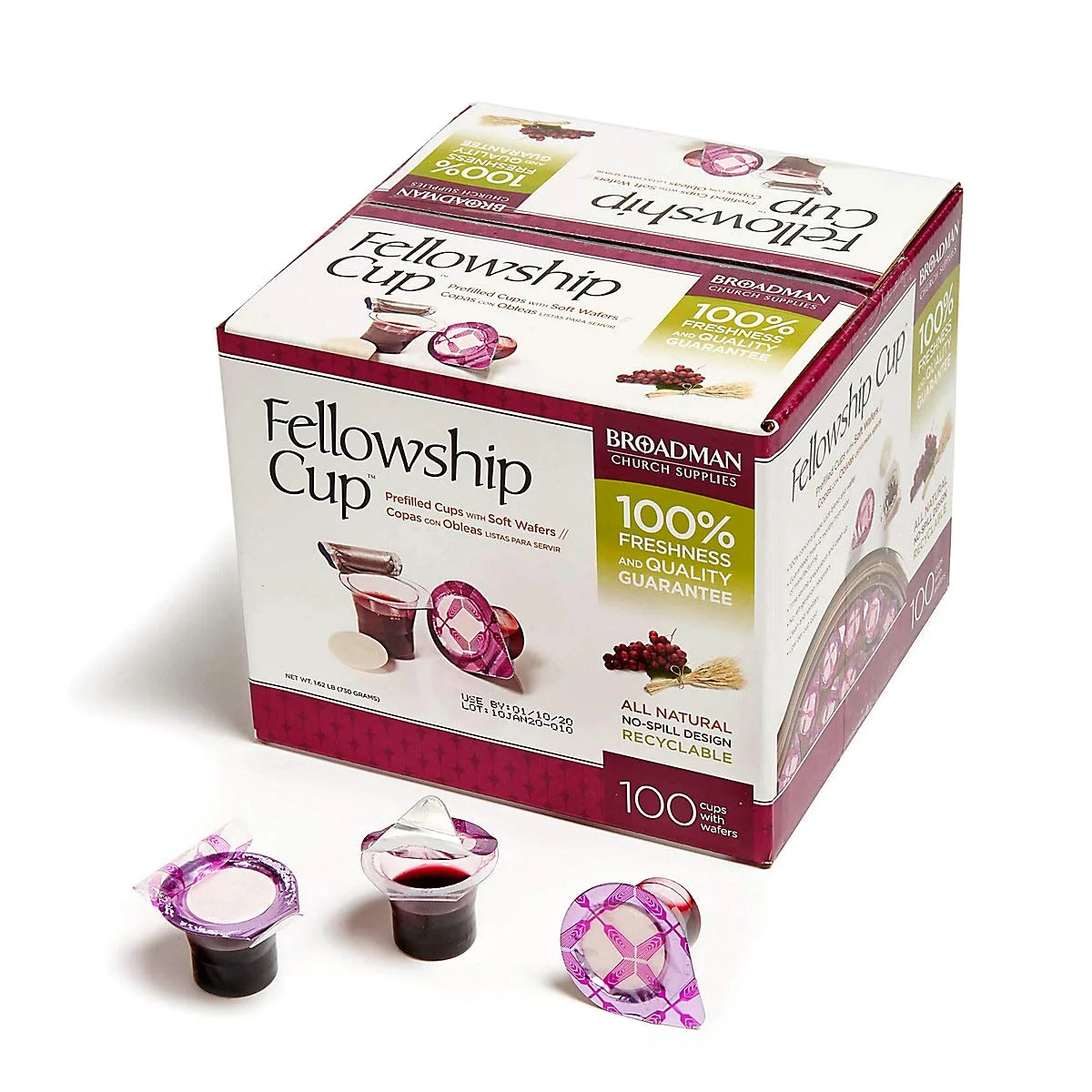
If your church uses prefilled cups, the juice-only Fellowship Cup with separate gluten-free bread keeps the two apart without a second tray. The juice-and-wafer cup makes no gluten-free claim, so it is not the one to hand to a member who needs it.
Reading the label, line by line
Two lines on a bag answer two different questions. The gluten-free claim, when the maker prints it, says the food meets the FDA limit of less than 20 parts per million. The ingredient list, and the "Contains" line next to it when there is one, names wheat whenever wheat is in the food, because wheat is one of the nine major allergens the label must declare.
Read both. A member with celiac disease looks for the gluten-free claim. A member with a wheat allergy looks for wheat in the ingredients and the "Contains" line. Since the gluten-free claim is voluntary, a bread without it may still be free of gluten, but a church cannot tell from the bag, so the labeled bag is the one to buy.
Talk to the people who need it
The member who cannot eat wheat knows more about it than anyone on the communion team. Ask how they would like to be served: some are happy with a separate plate, some prefer to take their piece first, and a few bring their own. Whatever you agree, tell the servers before Sunday so nobody improvises at the table.
Children who need gluten-free bread usually come with a parent who has read every label in the house. A short word with the parent after the service is worth more than a sign on the table.
The cup is part of it
If your church uses prefilled cups, the choice of cup matters as much as the bread. The juice-and-wafer Fellowship Cup puts an unleavened wafer under its top seal, and its box makes no gluten-free claim. The juice-only cup carries no wafer at all, which lets you pair it with the gluten-free plate and keep every element sealed until it is served.
Visits and small groups
A member who cannot come to church still takes communion, and the same care goes with the deacon. Pack a few gluten-free wafers in their own small bag or container, separate from the regular bread in the portable set, and hand the gluten-free piece over first.
Sealed juice-only cups travel well for this: nothing is poured in the room, and the bread is the only element that needs a second container. Write the date the pouch was opened on its side, so the next visitor knows how long it has been open.
Storing the bag between services
A gluten-free bag kept on the same shelf as the regular bread picks up crumbs every time someone reaches past it. Give it a shelf, a box or a labelled container of its own, and keep it closed with a clip or in a sealed tub once it is opened. Write the date it was opened on the side, and finish the oldest bag first.
The person who sets the table should handle the gluten-free plate first, before touching the regular bread, and use a clean plate that is kept for this job only. If the same volunteer prepares both, wash and dry the hands between them. These are small steps, and they are the ones members with a gluten intolerance ask about most often. The communion bread shelf shows which bags are gluten-free and which are not, so the order itself does not mix them up.
How much to keep on hand
A bag of about 50 gluten-free wafers serves two members for six months of monthly communion with room to spare. A church that offers gluten-free bread to anyone who asks will go through a bag of 200 pieces faster. Ask, at the next service, who needs it, and order for that number.
A gluten-free plate, step by step
Before Sunday
- Ask who needs gluten-free bread
- Read the label on the bag
- Check the bag is sealed and in date
At the table
- Set the gluten-free plate out first
- One server for that plate only
- No crumbs from the regular bread near it
After
- Reseal the bag
- Wash the plate on its own
More guides
Read next
Ordering
How many communion cups does your church need?
The arithmetic of a communion order: people times services, the box sizes of Broadman cups, what one cup costs, and how long a box lasts.
Communion
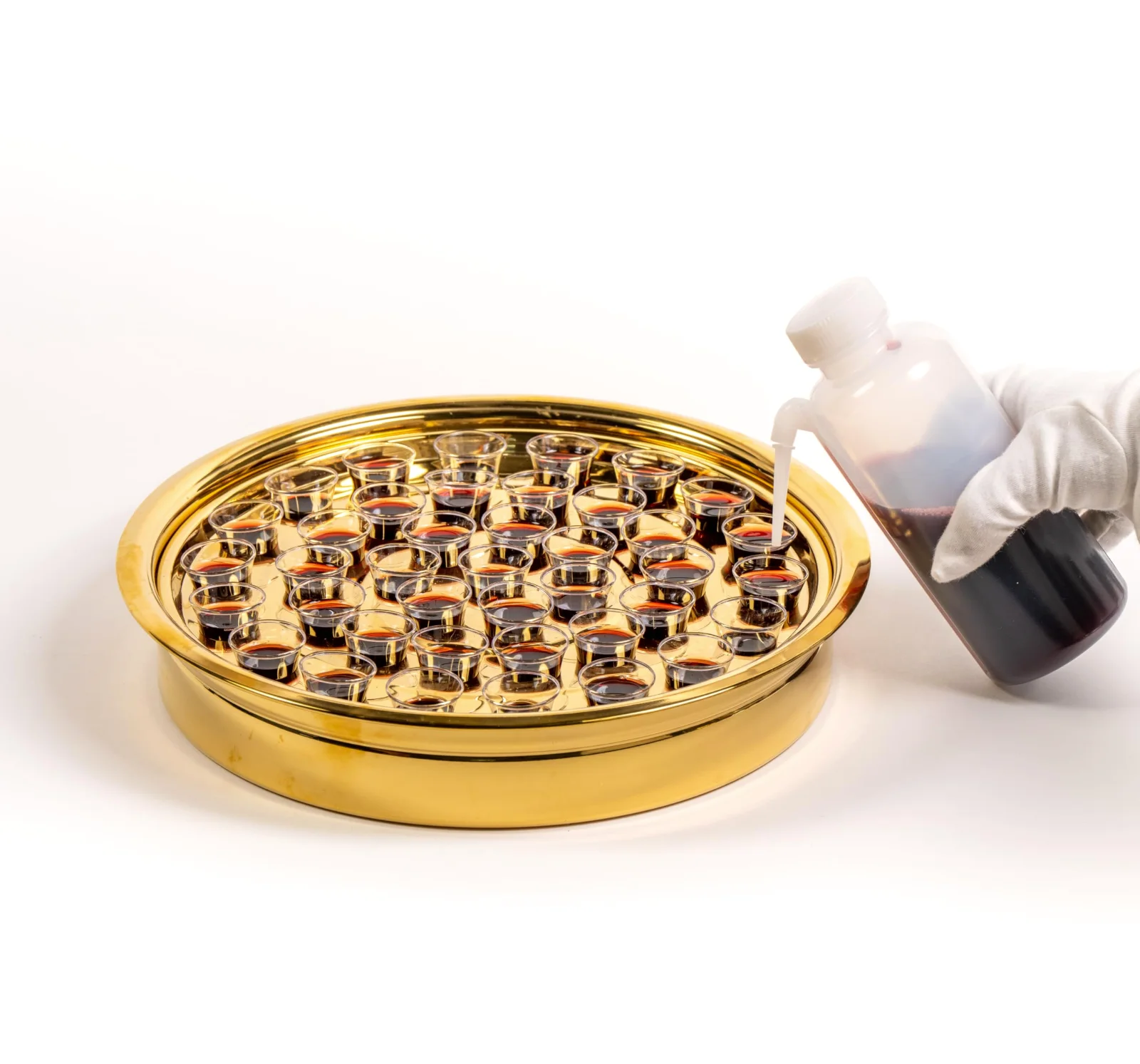
Prefilled communion cups or pour your own: what each costs you
Fellowship Cup prefilled cups against empty cups, a filler and bread: the price per person, the time on Saturday, the washing-up and the trays.
Church office
Offering envelopes and the giving records your members need
What the IRS asks of a giver and of the church: records for gifts of any amount, written acknowledgments from $250, and how numbered envelopes help.